


Background
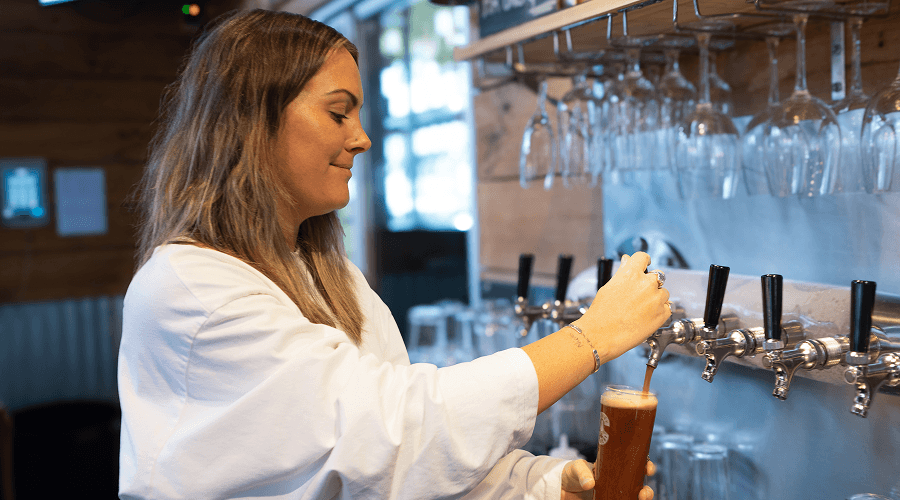
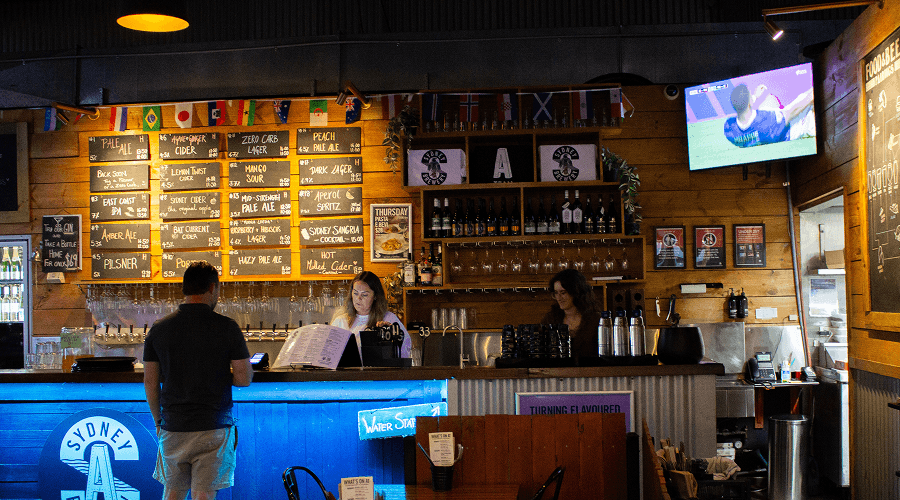
Sydney Brewery has been making beer since 2005. Two decades on, it brews across four sites, Surry Hills, the Hunter Valley, Rozelle and Alexandria, and the newest of those doubles as a 350 seat brewpub in Sydney's inner south.
That makes it two businesses in one. A manufacturer with real production volume, and a hospitality group serving the people who come to drink what it makes.
Across NSW
At Alexandria
Of brewing
"Sydney Brewery is a company. We are a manufacturer of beer predominantly, and cider," says Tricia Stone, General Manager of Hospitality at Sydney Brewery. "And then on top of that we have a few hospitality businesses integrated into the venues as well."
The problem you do not see coming
Most operators can tell you where the obvious costs sit. The dangerous ones are the costs that move without announcing themselves.
Draft beer is the classic case. A line that is pouring slightly off, a keg that is not yielding what it should, a pour that is a touch heavy across a busy Saturday. None of it shows up as an incident. It shows up weeks later as a GP number that does not make sense.
"Especially with draft beer, it's quite hard to control sometimes," Tricia says. "There can be many factors, or many problems that are happening behind the scenes, before you even realise that that's become an issue."
The same applies on the supply side. Prices move constantly, and the ones that hurt are rarely the ones you are watching.
"Obviously, there's been a lot happening in the world, so price increases are not uncommon," Tricia says. "But sometimes it can be a product that goes under the radar and stings you."
Both problems have the same shape. By the time they are visible in the P and L, the money is already gone.
Catching draft beer variance before it becomes a number
Sydney Brewery's answer is frequency. Not a monthly stocktake and a post mortem, but counts often enough that a variance has nowhere to hide.
"We do stocktakes pretty frequently, to be honest," Tricia says. "So it's quite good at identifying problem areas before they become a huge issue."
The value is not the count itself. It is that the count is fast enough to do regularly without pulling a manager off the floor for a day. Once stocktaking stops being a burden, it stops being something you put off, and the gap between a problem starting and a problem being found collapses.
"By having the tools that we have, and the ability to do stocktakes as frequently as we do, it means we really probably are managing to cut out any issues before they become one"
A live feed of what you are spending against what you are making
Margin protection is only complete when cost and revenue sit in the same view. At Sydney Brewery, that comes from connecting the systems either side of the POS.
"We do have a few other programmes that we use that do integrate with Bepoz," Tricia says. "So from accounting to rostering, we get almost like a live feed of what we're spending against what we're making, which is super important."
Labour and cost of goods are the two largest controllables in any venue. Seeing them against revenue as the week happens, rather than after it closes, is what lets a manager change a roster on Thursday instead of explaining it on the following Monday.
Speed when 100 people walk in at once
None of the above matters if the system slows the bar down.
"We could have anything from 100 people, or 50 people, walk through the door at the same time," Tricia says. "So it needs to be reliable, stable and quick to use for the team as well."
For a brewpub, the pressure is bar side and it comes in waves. What Tricia points to is the unglamorous detail that decides how a rush goes.
"It allows us to easily process large orders, large bar tabs," she says. "There's a few features that they use, you know, minimal entry points, anything to just get things through as quickly and easy as possible."
Fewer taps per order does not sound like a strategic advantage. Multiplied across a Friday night with 350 people in, it is one.
Set up once, changed constantly
Tricia is clear that the system had to grow with the business, and that the start mattered.
"Bepoz has really helped us as we've grown," she says. "Bepoz were a huge part in helping us set up initially. Lots of training to help us understand everything we need to know about the back end as well."
What she values now is different from what she valued on day one. Hospitality does not sit still, and neither does a brewery releasing new product.
"In this style of industry, we change things all the time, whether it be the way we use the system, or whether it be the products that we're selling through the system"
Results
-
Frequent stocktakes that surface draft beer variance before it hits GP
-
Invoice price changes flagged early enough to renegotiate or reprice
-
Accounting and rostering integrated for a near live view of spend against revenue
-
Fast processing of large orders and bar tabs during peak trade
-
Minimal entry points to keep service moving under pressure
-
A system that adapts as products and processes change across four sites
Looking ahead
Twenty years in, with four breweries and a 350 seat brewpub, Sydney Brewery is still changing what it makes and how it sells it. The system underneath has to keep up with that.
"I would recommend Bepoz if you're looking for something that is interchangeable, or something that can be adapted as and when you need it," Tricia says. "If you're looking for something that is interchangeable and easy to use, I would 100 percent recommend."
Losing margin somewhere and not sure where?
Bepoz gives breweries, taprooms and multi site hospitality groups the stock control, invoice visibility and integrated reporting to find the leak before it costs you a quarter. Book a demo and see it running in your venue.